
Optimized functioning of the intelligent transport infrastructure of high-speed highways
Оптимизированное функционирование интеллектуальной транспортной инфраструктуры высокоскоростных автотрасс
Одной из важнейших задач транспортной инфраструктуры России является обеспечение максимальной эффективности оптимизированного функционирования дорожного комплекса страны в процессе грузовых и пассажирских перевозок. Актуальной остается проблема достижения технологического суверенитета при конструировании востребованных интеллектуальных элементов транспортной инфраструктуры. Цель данной статьи рассмотрение основных компонентов интеллектуальной транспортной инфраструктуры скоростной автотрассы М-12 «Восток». Основные элементы интеллектуальной транспортной инфраструктуры оптимизированного участка Дюртюли–Ачит скоростной автомагистрали М-12 включают чувствительные детекторы транспортного потока, информационные табло, дорожные видеокамеры, средства автоматической фиксации нарушений и др. Оптический стационарный комплекс широкоугольной фотовидеофиксации позволяет измерить диапазон скоростей от 1 до 250 км/ч; зона контроля составляет от 1 до 75 м. Одним из центральных компонентов успешного функционирования умной автодорожной инфраструктуры являются системы связи: оптико-волоконные сети позволяют передавать данные с сенсорных датчиков на большие расстояния с минимальным энергопотреблением. Искусственный интеллект осуществляет аналитическую обработку полученных данных, выявляя аномалии дорожного трафика, сокращает заторы на 38% и уменьшает вероятность возникновения аварийных ситуаций. Интеллектуальная транспортная инфраструктура высокоскоростной автотрассы «Восток», оснащенная сенсорными датчиками, системами мониторинга, узлами связи, позволяет осуществлять оптимальный трафик автомобилей.
One of the most important tasks of Russia's transport infrastructure is to ensure maximum efficiency of the optimized functioning of the country's road complex in the process of freight and passenger transportation. The problem of achieving technological sovereignty in the construction of demanded intellectual elements of transport infrastructure remains urgent. The purpose of this article is to consider the main components of the intelligent transport infrastructure of the M-12 “Vostok” expressway. The main elements of the intelligent transport infrastructure of the optimized Durtyuli–Achit section of the M-12 expressway include sensitive traffic flow detectors, information boards, road video cameras, automatic detection devices, etc. The optical stationary wide-angle photo-video system allows measuring the speed range from 1 to 250 km/h; the control zone is from 1 to 75 m. One of the central components of the successful operation of a smart road infrastructure is communication systems: fiber-optic networks allow the transmission of data from touch sensors over long distances with minimal energy consumption. Artificial intelligence performs analytical processing of the received data, identifying traffic anomalies, reduces congestion by 38% and reduces the likelihood of accidents. The intelligent transport infrastructure of the Vostok high-speed highway, equipped with touch sensors, monitoring systems, and communication nodes, allows optimal traffic for cars and trucks.
скоростная автотрасса, транспортная инфраструктура, дорожная видеокамера, искусственный интеллект.
expressway, transport infrastructure, road video camera, artificial intelligence.
Transport communications are an integral part of the infrastructure of modern society and play a key role in ensuring the efficient operation of the economy [1]. Automobiles are one of the most common means of transportation, providing transportation of people and goods over relatively short and medium distances. One of the most important tasks of the transport infrastructure of the Russian Federation is to ensure maximum efficiency of the optimized functioning of the country’s road complex in the process of freight and passenger transportation for the implementation of the national project «Infrastructure for Life». In the context of the most acute challenges of global uncertainty, the most important urgent problem of the technical sciences is the achievement of technological sovereignty in the design of demanded intelligent elements of transport infrastructure.
This article is aimed at examining the main components of the intelligent transport infrastructure of the M-12 «Vostok» high–speed federal highway on the Dyurtyuli-Achit section.
The successful implementation of national projects for the construction of a backbone network of high-speed motorways [2], which meet international technical standards, remains a fairly promising area for the intellectual development of transport infrastructure. The 275 km Durtyuli–Achit section of the M-12 «Vostok» IB highway, introduced in July 2025, unites 3 regions: the Republic of Bashkortostan, the Perm Territory and the Sverdlovsk Region. The high-speed highway with a permitted speed of up to 110 km/h includes: 50 overpasses, 25 bridges, 24 eco-bridges and bio-crossings for animals, 6 transport interchanges [3, 4].
The most important components of the successful functioning of the automobile transport infrastructure of high-speed highways are highways with up to two or more lanes in each direction with a barrier dividing between the streams; bridges, interchanges, noise barriers, etc. Prevalent category I highways (estimated traffic intensity of over 14 thousand vehicles per day) most fully meet the conditions of automotive optimized traffic.
High-speed highways have asphalt-concrete pavement, wide traffic lanes (3.75 m), increased turning radii and limited maximum gradients (3-4%), as well as widened shoulders. Such road structures ensure high throughput and optimized safety; round-the-clock traffic is carried out on category I and II roads, and snow removal and anti-icing is carried out in winter. The ensemble of interconnected infrastructure facilities of motor transport includes high-speed highways; technical services of road facilities; various buildings for operation; road service facilities, other transport facilities and buildings.
The equipment of «Telematics» Concern with the latest smart transport infrastructure systems is being completed on the Durtyuli–Achit section of the M-12 «Vostok» highway. In the future, it is necessary to finally introduce neural network traffic management systems on the highway with a speed limit of 110 km/h, which will inform drivers in real time about obstacles, repair work or road accidents. In addition, the intelligent transport infrastructure [5] informs road traffic participants about the need to change lanes or change the speed limit using easy-to-read messages and signs on the information board.
The main elements of the intelligent transport infrastructure of the Durtyuli–Achit section of the M-12 expressway include sensitive traffic flow detectors, information boards, road video cameras, automatic detection of violations, etc. [6, 7]. Modern photo and video cameras are fundamentally divided into radar, video and laser cameras, and according to the installation method – into stationary and mobile. Optimized traffic flow detectors for intelligent transport infrastructure: classification scanners and trigger video scanners for registration of state numbers record the passage of vehicles by counting the number of vehicles.
Information boards of the intelligent transport infrastructure of the «Vostok» highway inform drivers about the current situation on the roads, contributing to the redistribution of traffic flows and reducing congestion. Automated lighting control makes decisions based on data from various sensors, optimizing energy consumption, which corresponds to the paradigm of sustainable development of civilization. The advanced smart systems used to equip the motorway will help improve safety, save travel time and reduce logistics costs. Artificial intelligence performs analytical processing of the received data, identifying traffic anomalies, predicting the formation of congestion and the possibility of emergency situations; ultimately, to control traffic flows, which reduces the level of atmospheric air pollution.
The latest high–resolution video cameras of the intelligent transport infrastructure of the Durtyuli-Achit section of the M-12 expressway make it possible to monitor traffic flow, recognize car license plates and record violations. One traffic video camera is capable of detecting up to 12 violations at once; the efficiency of recognizing state registration plates is 98%.
More than 800 automatic video cameras, sensors and photo-video scanners for cars and trucks are able to operate 24/7 around the clock. The «AVTOURAGAN» optical stationary photo-video system allows measuring the speed range from 1 to 250 km/h, the control zone is from 1 to 75 m. With the help of wide-angle cameras, the flow of cars is processed depending on the weather, lighting and camera angle with high accuracy and an error of about 2 km/h. «AVTOURAGAN» traffic cameras record traffic violations: speeding; driving under a forbidding sign; driving on the shoulder; driving over the permitted mass; prohibited lane changes, etc. The photovideofixation detector complexes are mounted on a fixed rigid support with metal brackets above the carriageway of the M-12 expressway (Figure 1).
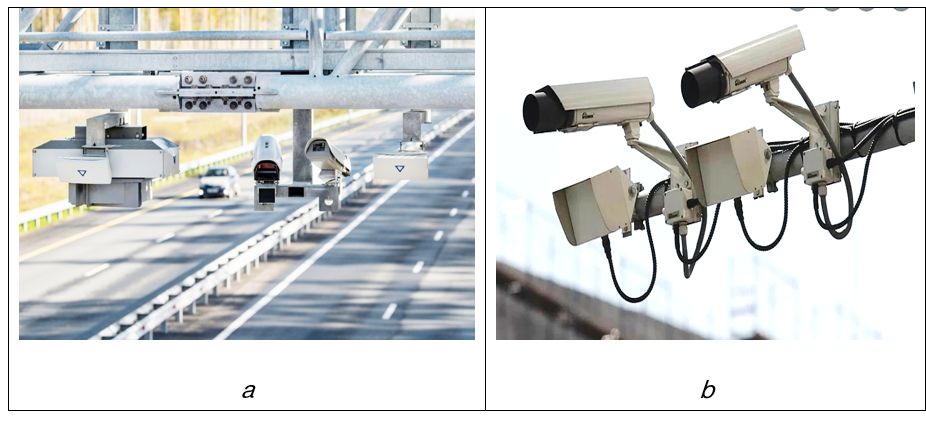
Figure 1. Automatic intelligent video recording systems mounted on stationary supports – a;
photo-video recording system «AVTOURAGAN» – b
When non-standard situations occur on the «Vostok» highway, real-time information about road accidents speeds up their elimination and reduces the likelihood of congestion at stops and parking lots. In the future, the M-12 federal highway is planned to be equipped with monitoring sensors and intelligent communication nodes, allowing real-time information about the condition of the roadway, car traffic, weather, as well as for the successful operation unmanned vehicles [8, 9] and even about the behavior of drivers.
It should be noted that the automated lighting control of the route makes decisions based on data from various sensors, optimizing power consumption. One of the central components of smart road infrastructure is digital communication systems [10]: fiber-optic networks allow data transmission from sensors over long distances with minimal energy consumption; 5G communication provides high data transfer rates and minimal delays, which is crucial of unmanned vehicles and remote emergency response systems; motion control centers receive data from touch sensors in real time and make automatic decisions.
The laser scanners of the intelligent transport infrastructure on the Dyurtyuli–Achit section of the M-12 «Vostok» high-speed federal highway are designed for contactless control of the movement of buses, trucks and cars. Piezoelectric (or strain gauge) sensors of automatic weight and dimensional control systems allow checking the weight of trucks at a minimum speed of 50 km/h. For effective monitoring of the Dyurtyuli–Achit section of the M-12 highway, specialized types of intelligent equipment will additionally be installed.:
◌ high — resolution video cameras;
◌ optimized transport vehicle detectors;
◌ compact weather stations for weather monitoring;
◌ automatic weight and dimensional control points.
Figure 2 shows intelligent video cameras, sensors for weight and size control, scanners, etc.
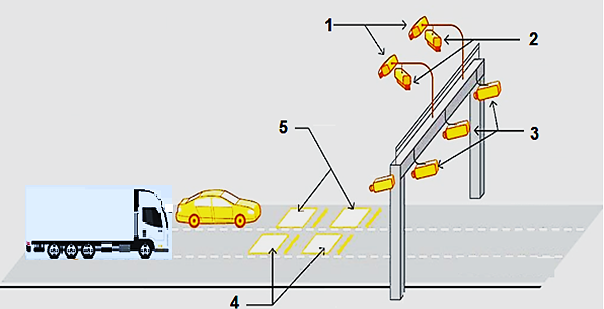
Figure 2. Scanners, video cameras, and touch sensors in intelligent transportation infrastructure
(1 – classification scanner; 2 – trigger video scanner; 3 – registration camera; 4 – mass sensors; 5 – inductive sensor)
Artificial intelligence performs analytical processing of the received data, identifying anomalies in traffic, predicting the formation of congestion and the possibility of emergency situations. The use of artificial intelligence in the process of optimized traffic management [11] promotes adaptive and high-speed movement of cars on the highway, reduces traffic jams by up to 38%. The implementation of the transport strategy for the development of the federal high-speed highway network M-12 «Vostok» is associated with comprehensive planning for the development of the economic and logistics infrastructure of the Volga-Ural region. Transport accessibility makes it possible to organize various types of medical and recreational tourism in the tourist and recreational complexes of Bashkortostan.
The data obtained from optimized devices for the functioning of the intelligent transport infrastructure: wind speed and direction, amount of rain and snow, temperature regime of asphalt pavement, etc. are promptly transmitted to the highway information processing center in digital format. The controller in the weather station, the central control unit, operates in real time, collects data from all sensors, processes data and transmits it automatically at certain time intervals or on request.
Touch-sensitive sensors of the road surface are placed in asphalt concrete or on its surface and monitor the condition of the highway roadway, temperature, humidity, the presence of ice or snow. One of the common technologies is optimized inductive loops embedded in the road surface and recording the movement of cars, which are integrated with automatic road weather stations (Figure 3).
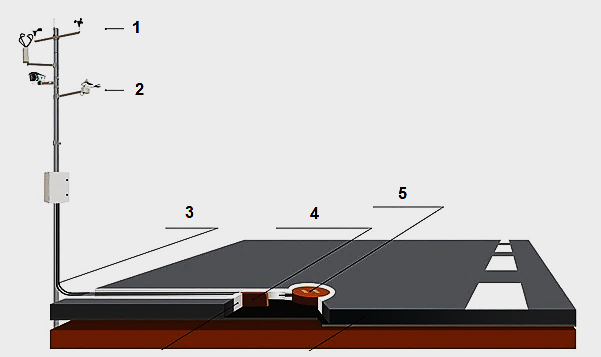
Figure 3. Intelligent meteorological support station
(1 – devices for determining wind direction and speed, precipitation; 2 – video cameras; 3 – cables; 4 – temperature sensor; 5 – sensor for determining the condition of asphalt concrete pavement)
The current data from the weather station controller is sent further to the meteorological monitoring center (situation center) of the M-12 «Vostok» highway for their subsequent processing, storage and archiving. The situational center is designed to organize and ensure the functioning of intelligent transport infrastructure, coordinate the work of related subsystems. The stationary technical facilities of the control center are located in a closed, air-conditioned room, operate around the clock and are a set of servers with installed general and special software, monitors on which changes in the parameters of meteorological conditions and road conditions are visualized.
The digital electronic toll collection systems of the M-12 expressway determine the numbers, types and class of cars, and also allow drivers to pay in convenient ways. Transponders mounted on the windshield of trucks and cars allow non-stop movement due to barrier-free charging technology. The fact that a vehicle is traveling is recorded by cameras without stopping, and payment is calculated based on the actual distance traveled automatically and is made through online services or a transponder.
It should be noted that the car is connected to the road infrastructure through sensors in the car, the driver’s mobile phone (tablet) and a specially developed corporate «Intranet» network along the smart road route. Unmanned vehicles on the test sections of the M-12 high-speed federal highway use automated technologies to control vehicles without direct human involvement: based on advanced sensor systems, «GLONASS» and artificial intelligence, unmanned vehicles are capable of navigating roads quite autonomously. It should be noted that it is necessary to take into account the condition of the roadway, weather conditions and even the behavior of other drivers involved in road traffic.
The high-speed and safe driving mode on the M-12 «Vostok» highway is provided by a wear-resistant asphalt-concrete road surface. Innovative areas of frontier development of geopolymer materials are in demand technological methods of high-quality efficient construction and long-term operation of expressways. Energy-saving geopolymer binders [12] make it possible to develop road building materials with more enhanced physical and mechanical characteristics, and the use of cheap man-made waste solves the most acute problems of environmentally friendly disposal.
In the context of modern challenges, the active development of the legislative and regulatory framework [13], taking into account international experience and technological innovations will make it possible to create an effective and safe traffic management system on the M-12 «Vostok» highway. It should be noted that the accelerated development of artificial intelligence and unmanned technologies makes high-speed traffic flows vulnerable to cyber attacks. Successful integration and trouble-free functioning of intelligent transport infrastructure requires import substitution of road resource-saving building materials [14, 15], expensive video cameras, sensors and scanners. Advanced intelligent systems, which are equipped with the M-12 highway, will help to increase comfort, safety, save travel time and reduce logistics costs.
Thus, in conclusion, it can be concluded that the intelligent transport infrastructure of the M-12 «Vostok» high-speed highway, equipped with touch sensors, monitoring systems, and communication nodes, allows real-time information about optimal vehicle traffic.
References
1. Mitryukova K.A. Influence of transport infrastructure on the regional socio-economic development: practical significance and scientific controversy. Journal of Economics, Entrepreneurship and Law. 2023; 13(7):2399-2412. https://doi.org/10.18334/epp.13.7.118352. EDN IPMCMV.
2. Rungskunroch P., Triwanapong S., Wattanajitsiri V. et al. Assessing the viability of enhancing logistics and supply chain operations: a case study of the Eastern Economic Corridor. Urban, Planning and Transport Research. 2024; 12(1). https://doi.org/10.1080/21650020.2024.2379352. EDN OHIWAP.
3. Bogushevich S.A., Samuilov V.M., Nevolin D.G. et al. High-speed highway M-12 Moscow – Tyumen: prospects and stages of construction. Innovative transport. 2022; 1(43):3-7. https://doi.org/10.20291/2311-164X-2022-1-3-7. EDN CQPVXF.
4. Khalikov R.M., Ivanova O.V., Pavlov S.Yu. et al. Innovative technologies in the construction of the Dyurtyuli-Achit section of the M-12 federal highway. Trends in the development of science and education. 2024; 108-13:62-65. https://doi.org/10.18411/trnio-04-2024-711. EDN SKRIKH.
5. Sysoev A.S., Lyapin S.A., Galkin A.V. et al. Intelligent methods of transport system management. Moscow: MADI, 2023. 192 p. EDN HGRIAR.
6. Aristova D.A., Makeeva E.Z., Fedorova O.V. The effects of the introduction of intelligent transport systems. The transport business of Russia. 2022; 1:114-115. EDN FTTQWY.
7. Ivanova O.V., Glazachev A.O., Khalikov R.M. et al. Efficient operation of motor transport during the construction of a four-lane section of the M-12 expressway. Modern perspective on the development of science, technology: Collection of the 3rd International Conference. Voronezh: Publ. "Universit. book", 2025; pp.164-167. EDN: BRKUBU.
8. Shkarpetkin E.A., Shatalov V.A., Vasilyeva V.V. et al. Implementation of the functionality of unmanned vehicles in the field of intelligent transport systems. The world of transport and technological machines. 2024; 4-1(87):97-103. EDN: KHCFBR.
9. Ivanova O.V., Pavlov S.Yu., Glazachev A.O. et al. Innovative unmanned vehicle operation technologies in high-speed federal highways. Modern innovations in engineering and technology: Collection of the International Conference. Kursk: Publ. "Univer. book", 2025; pp.139-142. EDN XOADRL.
10. Andrienko V.A., Kiyaev V.I., Kotova S.A. Smart roads: the use of intelligent systems and multi-agent technologies. Intelligent technologies in transport. 2025; 2(42):5-19. https://doi.org/10.20295/2413-2527-2025-242-5-19. EDN PPPJTS.
11. Ivanova O.V., Glazachev A.O., Pavlov S.Y. et al. The in-demand application of artificial intelligence in traffic management on the Dyurtyuli–Achit section of the M-12 motorway. Prospects for the development of technologies: Collection of the 3rd All-Russian Conference. Voronezh: Publ. "Univer. book", 2025; pp.167-170. EDN FXSQLT.
12. Khalikov R.M., Ivanova O.V., Pavlov S.Y. et al. Energy-saving technologies for the use of geopolymer composites in the construction of transport facilities. Actual problems of science and education: Collection XXXVII International. Moscow: Publ. "Znanie-M", 2025; pp.525-530. EDN BDOJEN.
13. Budnik O.A., Tkacheva V.A., Loktev D.M. The development of intelligent transport systems in Russia: aspects of legislation. Automobile. Road. Infrastructure. 2024; 2(40). EDN XGJELA.
14. Latypova Z.B., Khalikov R.M., Glazachev A.O. et al. Geoecological aspects of the use of lime-containing large-tonnage soda production waste in Bashkortostan Problems of regional ecology. 2023; 4:68-72. https://doi.org/10.24412/1728-323X-2023-4-68-72. EDN ZFOTOL.
15. Nedoseko A.I., Khalikov R.M., Pavlov S.Yu. et al. Supramolecular improvement of the performance characteristics of asphalt-concrete road surfaces by structuring additives of functional polymers. Smart composites in construction. 2025; 6(4):43-54. https://doi.org/10.52957/2782-1919-2025-6-4-43-54. EDN BGNCBM.