
Managing high-performance teams in mobile development as a factor of sustainable digital product growth
The article examines the management of high-performance engineering teams in the field of mobile development as a key factor in the sustainable growth of digital products. It analyzes organizational and technical practices that influence team productivity, including mentoring, responsibility delegation, and the formalization of engineering roles. The significance of architectural decisions and technical continuity – such as documentation, CI/CD pipelines, and code standardization – is emphasized as a foundation for maintaining team efficiency and adaptability. The study substantiates the necessity of aligning the architectural model with team scale and of cultivating an internal engineering culture aimed at reducing dependency on individual specialists and enhancing development sustainability under conditions of frequent change.
mobile development, development team management, team effectiveness, digital product architecture, mentoring, delegation, engineering roles.
- Introduction
The competitiveness of digital products in a rapidly evolving technological environment is determined not only by the level of applied technologies but also by the effectiveness of the teams responsible for their development. This is particularly relevant for mobile applications, where high release velocity, changing requirements, and the need for continuous user engagement impose additional pressure on engineering teams. Under these conditions, the management of high-performing teams becomes a critical factor in the sustainable development of digital products, ensuring both the technical stability of solutions and organizational flexibility. The growing complexity of digital ecosystems requires a systematic approach to team collaboration, including the adoption of well-designed architectural solutions, the development of an internal culture of mentoring and delegation, and the support of knowledge and practice continuity.
The purpose of this study is to analyze the impact of organizational and technical practices on the formation of productive engineering teams in mobile development, with a particular focus on the relationship between architectural decisions and team effectiveness. The relevance of this topic is driven by the need for sustainable digital product development, which is not achievable without reliable and well-coordinated engineering teams. Special attention is given to practices that reduce dependency on individual contributors, enhance team adaptability to change, and maintain development quality throughout the entire product lifecycle.
- Main part. Theoretical foundations of building effective engineering teams
The effectiveness of an engineering team in the context of software development is defined by the team’s ability to consistently achieve set objectives while meeting requirements related to quality, timelines, and the sustainability of technical solutions [1]. In both academic and applied literature, team effectiveness is commonly described through a combination of characteristics such as productivity (output), adaptability, coherence, and resilience to internal and external changes. In engineering practice, however, effectiveness is also understood as the team’s capacity for systematic architectural improvement, maintenance of technical continuity, and reduction of excessive solution complexity.
According to the LeadDev Engineering Team Performance Report in 2024, based on data from surveys conducted among almost one thousand engineers and technical leaders, key factors that undermine the effectiveness of engineering teams, as shown in the report, lie not in technical tools but in other, more organizational, and process-related, areas. It was found that the most frequent answers pointed to lack of goal/priority clarity, as well as lack of personnel, as the most significant impediments to reaching sustainable development (fig. 1).

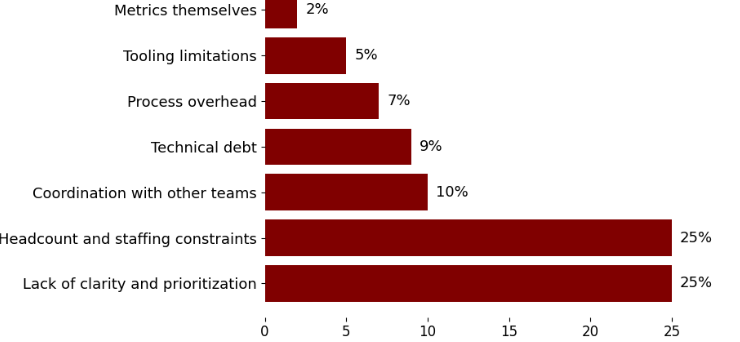
Figure 1. Factors limiting the effectiveness of software engineering teams [2]
In high-technology environments, effectiveness is directly associated with the quality of engineering decisions, ranging from application architecture to the adoption of DevOps practices and technical debt management strategies. Unlike traditional interpretations of effectiveness that emphasize primarily “soft” interaction factors, engineering teams place decisive importance on metrics such as build stability, incident response time, test coverage, and the speed of delivering functionality to production. At the same time, the sustainable functioning of a team as an integrated entity is possible only in the presence of a mature organizational culture, in which the leader’s role extends beyond controlling technical outcomes to fostering a psychologically safe environment that supports coordination and growth. As noted in recent studies, organizational behavior and leadership approaches, including elements of psychological awareness, can significantly influence the long-term resilience of teams and their ability to adapt to change [3].
The mobile development environment exhibits a number of specific characteristics that directly affect the formation of engineering teams and the organization of their interaction (table 1).
Table 1
Specifics of mobile development and their impact on team organization [4, 5]
| Characteristic of mobile development | Engineering implications | Team requirements |
| Multiplatform support (iOS, Android) | Need to maintain different tech stacks and sync releases. | Specialization + cross-platform coordination. |
| Frequent OS updates | Continuous adaptation to new APIs and restrictions. | Monitoring changes, flexible architecture. |
| High UX expectations | Constraints on app size, performance, and interface design. | UX testing, collaboration with design teams. |
| Limited device resources | Performance and battery usage optimization. | Profiling and optimization throughout the pipeline. |
| Short time-to-market | Fast builds, CI/CD, minimization of manual steps. | DevOps skills, process automation. |
| Device and OS version fragmentation | Testing across many configurations. | Use of emulators and structured test matrix. |
Thus, mobile development imposes expanded requirements on engineering teams from both technical and organizational perspectives. The successful operation of such teams is possible only in the presence of transparent processes, flexible architecture, and a team culture oriented toward continuous adaptation. In this context, engineering effectiveness becomes a function not only of individual technical expertise, but also of the collective ability to make timely architectural decisions, maintain coordinated interaction, and remain resilient to external changes. This perspective aligns with contemporary research on digital systems design, which emphasizes the structural and functional role of coordinated engineering practices in ensuring the sustainability of complex digital products [6].
- Organizational mechanisms for managing engineering effectiveness in mobile development teams
The formation of a highly effective engineering team is impossible without systematic organizational support that promotes stable team dynamics, knowledge transfer, and sustained focus on long-term project goals. In the context of mobile development, where teams operate under conditions of high intensity and the need for rapid adaptation, organizational practices act as catalysts for productivity and for reducing internal risks. Among the most significant practices are mentoring, delegation of responsibility, and role formalization, which ensure process transparency, accelerate the onboarding of new team members, and reduce dependence on individual specialists.
Mentoring represents a purposeful process of transferring professional knowledge, technical standards, and value orientations from more experienced specialists to less experienced team members [7]. The diversity of mentoring formats makes it possible to adapt this approach depending on team size, participant maturity, and the stage of project development (table 2).
Table 2
Forms of mentoring in engineering teams and their functional objectives
| Form of mentoring | Description | Purpose and effect |
| Individual mentoring | One-on-one: an experienced developer is assigned to a newcomer. | Accelerated onboarding, social integration, lower entry threshold. |
| Pair programming | Collaborative coding with driver–observer role rotation. | Skill transfer through practice, improved code quality. |
| Role-specific mentoring | Mentoring by specialization: DevOps, QA, UI/UX, etc. | Development of domain-specific expertise, reduced role-based misunderstandings. |
| Group mentoring | Team-based mentoring sessions, including architecture discussions. | Collective learning, unification of engineering standards. |
| Institutionalized mentoring | Embedded into team processes (onboarding, code review, architectural guidelines). | Long-term knowledge continuity, support for architectural and procedural consistency. |
It is worth noting that the role of mentoring is much more than one-way knowledge transfer; mentoring is actually a phenomenon involving cultural integration. It helps to shape the overall engineering culture, reduces the risk factors associated with knowledge fragmenting, and also helps with scaling up the team much faster. In the case of a rapidly developing scenario for mobile technology, with high-paced frameworks, architectures, and tools, the role of mentoring has become much more than education, including a strategic component for the sustainable development of the corresponding digital products along the entire lifecycle.
In an engineering team, delegation of duties is not only an assignment of responsibilities but also building a framework for responsibility that offers architectural consistency, independence, and a sustainable collaboration [8]. Unlike administrative delegations, delegations in an engineering team are grounded on the concept of architectural boundaries, whereby every individual who takes part in the team has their own domain of responsibility. This is highly important in mobile development because of high interconnections of components with API, services, platform-specific functions, and UI.
Effective engineering delegation requires a balance between deep specialization and a shared architectural context. Individual ownership must be complemented by collective understanding to maintain team resilience to change and staff turnover, while autonomous actions remain aligned with overall team processes through coordinated development frameworks such as Scrum or Kanban (table 3).
Table 3
Levels of engineering delegation and their organizational effects
| Delegation level | Example of implementation | Technical impact | Organizational outcome |
| Modular (by components/ blocks) | Responsibility for a specific screen, service, or feature module. | Improved quality through deep component understanding and optimization. | Increased specialization, faster decision-making. |
| Contextual | Responsibility for a technical domain (e.g., CI/CD, UI guidelines). | Greater consistency in engineering decisions. | Formation of internal technical expertise zones. |
| Role-based | Delegation of architectural, testing, or release responsibilities. | Reduction of technical debt, stronger adherence to standards. | Resilience to staff turnover, clearer accountability. |
| Collective (shared codebase) | Open code access with defined maintainers per module. | Increased flexibility, rapid bug resolution. | Distributed responsibility, enhanced team-wide redundancy. |
Thus, engineering delegation in mobile development serves as a strategic tool for managing team quality and scalability. It facilitates rational workload allocation, enhances accountability rather than micromanagement, and improves the resistance of products to change and organizational/technical risks. As change accelerates and the multi-platform scenario unfolds, delegation emerges as a crucial part of the management infrastructure, balancing personal skills and collective teamwork.
Role definition for engineers working together is very helpful in reducing duplication of work in the functional area and improving the area of expertise. For mobile app development, the teams comprise mobile-specific developers for different platforms, test automation engineers, DevOps engineers, UI/UX designers, and technical leads who serve as architectural coordinators. Modern role definition allows overlaps of roles, especially for small teams that are very flexible. The conditions mentioned make architectural maturity and the role of the technical lead even more important.
At the same time, clearly defined areas of responsibility influence not only process efficiency but also the professional positioning of individual specialists within the team. Assigning stable technical domains to specific engineers fosters the development of recognizable expertise, which in a digital environment acquires the characteristics of a professional personal brand. This alignment between formal roles and demonstrated competencies facilitates onboarding, reduces conflicts, and improves the effectiveness of code review and testing processes, while simultaneously strengthening the long-term resilience of the team and its human capital [9].
Thus, a systemic basis for a competent team performance at a mobile development environment may include mechanisms such as mentoring, delegation, and formalization of engineering. The mentioned mechanisms may contribute to a smoother handling of challenges posed by human factors, as well as those aspects associated with team scaling, which are particularly important, especially due to intensive release cycles and, as a consequence, demands to support multiplatform solutions. Rational allocation of responsibility areas, the cultivation of a culture of collective expertise, and the institutionalization of engineering roles serve as strategic conditions not only for short-term efficiency but also for the long-term sustainable development of digital products.
- Architectural strategies and engineering practices as tools for improving mobile team productivity
In high-load mobile development, architecture and engineering practices serve not only as the technological foundation of the product but also as key mechanisms for organizing team workflows. Clearly defined architectural boundaries, process automation, and controlled complexity directly affect a team’s ability to work in parallel, scale efficiently, and maintain a sustainable development pace. The primary architectural strategies and engineering practices that influence the productivity of mobile development teams are summarized in table 4.
Table 4
Architectural strategies and engineering practices for improving mobile team productivity
| Strategy / practice | Technical implementation | Engineering impact |
| Modular architecture | Decomposition into independent modules and layers (MVVM, Clean Architecture, MVI). | Enables parallel development and reduces integration conflicts. |
| Architectural boundaries | Explicit module contracts, interfaces, and dependency rules. | Clarifies ownership and simplifies code review. |
| Technical continuity | Documentation, architectural diagrams, coding conventions. | Accelerates onboarding and reduces dependency on individual engineers. |
| CI/CD infrastructure | Automated build, testing, and deployment pipelines. | Improves release predictability and minimizes manual errors. |
| DevOps and observability | Logging, monitoring, and crash reporting. | Enables rapid incident detection and feedback from production. |
| Complexity management | Dependency injection, unidirectional data flow. | Controls architectural growth and improves system stability. |
| Static analysis and quality control | Linters, coverage analysis, memory leak detection. | Early defect detection and codebase stabilization. |
In summary, architectural practices and engineering methods provide an environment in which team productivity varies according to the consistency of technical decisions, the level of automation, or the ability to manage system complexities. In mobile app development, this environment allows developers to achieve simultaneous fast functionality delivery and product stability and scalability in the long run.
- Impact of architectural approaches on the effectiveness of team interaction in mobile development
Empirical studies indicate that architectural decisions have a direct impact on development productivity and the quality of team interaction. A number of studies show that inadequate transfer of architectural knowledge significantly complicates the onboarding of new team members and increases cognitive load during collaborative code work, which in turn reduces the overall effectiveness of interaction within engineering teams.
For example, Ernst and Robillard (2023) conducted an empirical study aimed at analyzing how the format of architectural documentation affects developers’ ability to extract and interpret architectural knowledge [10]. Participants were asked to solve tasks related to understanding the architecture of a software system using different forms of architectural documentation. The results demonstrated that structured architectural documentation was perceived by participants as more convenient for navigation and practical use compared to unstructured or weakly formalized textual materials.
In highly complex mobile projects characterized by frequent changes, architectural decisions directly shape the way developers coordinate their work, the depth of shared understanding within the team, and the speed at which technical changes are aligned. An empirical study based on interviews and questionnaires of practicing software architects working in teams – including domains with elevated requirements for reliability and performance – demonstrates that architectural decisions have a critical impact on application performance, device resource management, and the stability of the user experience [11]. The authors show that architecture is perceived by practitioners as a key determinant of system quality and as a mechanism that guides engineering decision-making within teams. In particular, insufficient attention to architectural technical debt at early stages of development leads to increased maintenance complexity, slower implementation of changes, and higher coordination costs within the team, effects that are especially pronounced in mobile projects with frequent release cycles and the need to support multiple platforms.
An additional architectural factor that significantly influences the effectiveness of team interaction in mobile development is the choice of concurrency and asynchronous execution models. The transition from traditional thread-based approaches to higher-level concurrency mechanisms makes it possible not only to improve the performance and controllability of software systems, but also to simplify the architecture of interactions between components [12]. In the context of mobile applications – where asynchronous network operations, user interface updates, and state management are executed in parallel – the use of structured concurrency models reduces code complexity and increases the predictability of system behavior. This, in turn, facilitates a shared understanding of architectural decisions, lowers cognitive load during collaborative development, and decreases the number of errors related to concurrency and state handling, thereby positively affecting team coordination and the speed of change implementation under frequent release cycles and multiplatform support.
Quantitative data from large-scale industry surveys also confirm the significance of architectural and organizational factors for the effectiveness of team interaction. In particular, the results of a large empirical study based on a survey of 891 software development professionals show that clarity of goals, transparency in the distribution of responsibilities, and the quality of internal communication directly correlate with the perceived effectiveness of team performance (fig. 2).
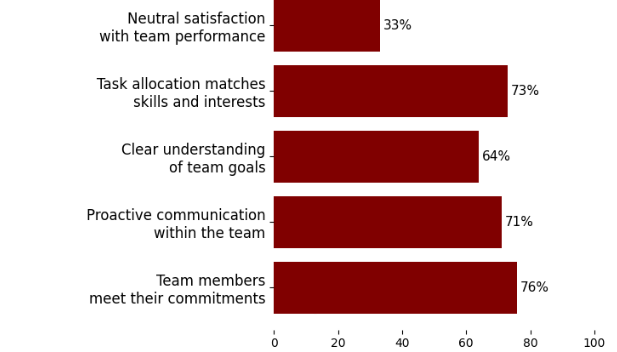
Figure 2. Indicators of team interaction and satisfaction in software engineering teams [13]
Thus, architectural approaches in mobile development should be regarded as a systemic factor that determines not only the technical characteristics of a software product, but also the quality of team interaction. Empirical evidence confirms that structured architectures, transparent transfer of architectural knowledge, and deliberate selection of technological models – including asynchronous and concurrency mechanisms – contribute to reducing cognitive load, accelerating team member onboarding, and increasing the consistency of engineering decisions. Under conditions of high dynamics in mobile projects, frequent release cycles, and multiplatform support, architectural maturity becomes a key prerequisite for sustainable team interaction, enabling the reduction of coordination costs and the maintenance of predictable software system evolution over the long term.
- Conclusion
The sustainable development of a digital product in the field of mobile development is not possible without building a highly effective engineering team that operates on the basis of balanced organizational and technical practices. The study demonstrates that team productivity is shaped not only by the professional competence of individual developers, but also by systemic mechanisms, including institutionalized mentoring, architecturally informed delegation of responsibility, and clearly defined engineering roles. These organizational elements reduce risks associated with team growth, staff turnover, and increasing project complexity, while simultaneously maintaining process coherence and continuity of engineering culture.
From a technical perspective, architectural decisions and complexity management practices play a critical role in ensuring team productivity and scalability. The use of modular approaches, the support of CI/CD infrastructure, the standardization of documentation, and the automation of development processes form a stable technical foundation that enables teams to adapt effectively to change. Based on the analysis of the practices discussed, it is recommended to design product architecture in alignment with both the current and anticipated scale of the team, to formalize mentoring and internal learning processes, to introduce unified interface standards and code ownership models, and to integrate DevOps practices as a component of engineering culture rather than merely as a set of tools. The combined application of these principles makes it possible to achieve not only short-term efficiency, but also the long-term sustainability of digital products.
References
1. Pawar C. S. Project Management Strategies for Multigenerational Engineering Teams: Enhancing Collaboration and Performance // International Journal for Research in Applied Science and Engineering Technology. – 2025. – Vol. 13.
2. Engineering team performance report 2024 / LeadDev // URL: https://leaddev.com/wp-content/uploads/2025/05/Team-Performance-Report__LDMO___0.pdf (date of application: 10.12.2025)
3. Nazarova Ye. The influence of psychoanalytic practices on leadership and organizational culture // International Journal of Professional Science. – 2025. – №4(1). – P. 71-77. EDN: FDODIX
4. Liu Y., Mei C., Hao J. Programming Models for Determining Optimal R&D Arrangement in Mobile Application Development Process // IEEE Access. – 2022. – Vol. 10. – P. 133945-133957. DOI: 10.1109/access.2022.3229131 EDN: DWCBAK
5. Kodithuwak S., Pacillo N. Mobile Software Development in the Digital Age: A Comparative Evaluation of Cross-Platform Frameworks // Journal of Policy Options. – 2025. – Vol. 8. – №. 2. – P. 9-17.
6. Ulyanov V. Designing user interfaces in digital financial services: structural and functional contribution to the development of the digital economy // Universum: technical sciences: electronic scientific journal. – 2025. – №11(140). – P. 32-37.
7. Volpe E. S. Effective mentoring strategies to support underrepresented students during a virtual summer research experience for engineering education undergraduates // International Journal of Mentoring and Coaching in Education. – 2025. – Vol. 14. – №. 2. – P. 162-179.
8. Upton H. Implicit incentives and delegation in teams // Management Science. – 2024. – Vol. 70. – №. 7. – P. 4722-4741.
9. Mudrov M. Formation of a personal brand in the digital environment as a strategic resource for business development // Journal of Economics, Finance And Management Studies. – 2025. – Vol. 8(11). – P. 7383-7389.
10. Ernst N., Robillard M. P. A study of documentation for software architecture // Empirical Software Engineering. – 2023. – Vol. 28. – №. 5.
11. Neto M. V. da S., Malucelli A., Reinehr S. Agile Software Architecture: Perceptions on Quality and Architectural Technical Debt Management // Proceedings of the Brazilian Symposium on Software Architecture (SBCARS). – 2025.
12. Maksimov V. Yu. Progressive parallelism in practice: from classical threads to virtual threads in Java and coroutines in Kotlin // Current Research. – 2024. – №. 24 (206). – P. 42–47. DOI: 10.5281/zenodo.11526785
13. Cerqueira L., Nunes L., Guerra R., et al. Assessing software practitioners’ work engagement and job satisfaction in a large software company – what we have learned // SN Computer Science. – 2025. – Vol. 6. – №. 273. DOI: 10.1007/s42979-025-03772-1