
Feasibility study on reducing road congestion in Ulaanbaatar city
Nowadays, in line with the population growth of Ulaanbaatar city, road traffic is increasing rapidly, and the time spent on the road by citizens is increasing significantly. The purpose of this research is to determine the role and impact of railway transport in reducing road congestion in Ulaanbaatar city. The study emphasizes that the commissioning of the Khushi Valley railway will reduce the flow of freight and passenger transport through the city and reduce the need for branch road diversions. As a result, it is possible to reuse the old railway infrastructure in the city for public transport purposes, and to study how this will affect the reduction of road congestion. The research was conducted using quantitative analysis methods and was based on the study of the structure of the suburban railway network of UBTZ, the branch roads of private enterprises, their capacity indicators, as well as the current situation of road congestion. According to the results of the study, the phased transfer of railway freight traffic and logistics operations passing through the city center to the outskirts of the city will not only have a tangible impact on reducing road congestion, but also create many advantages, such as improving the continuity of road traffic, developing new types of public transport, and increasing the efficiency of urban planning.
Railway, Traffic, Road congestion
INTRODUCTION
Traffic congestion in Ulaanbaatar has become one of the pressing socio-economic problems of Mongolia. Therefore, within the framework of the goal of reducing congestion, it is intended to implement comprehensive measures such as expanding the road network, upgrading roads and road facilities, improving the quality and accessibility of public transport, and introducing a smart integrated traffic system. It is also pursuing a policy of reducing road congestion by introducing large-capacity public transport modes such as the metro, special road buses /BRT/, and light rail trains /LRT/ based on foreign investment.
In addition, on December 7, 2023, the law “On reducing traffic congestion in the capital city of Ulaanbaatar and housing in ger districts” was approved by the joint session of the Mongolian State Great Khural, which was an important step in creating the legal environment for implementing the above measures.
Among these solutions, this research study focuses on the impact of railway transport and aims to analyze and prove its effectiveness through quantitative and qualitative research methods.
Since there is no integrated freight logistics terminal in Ulaanbaatar that meets modern international standards for receiving full trains, freight logistics operations are branched out from Amgalan, Ulaanbaatar, and Tolgoi stations, and freight is distributed through 10 freight terminals and more than 300 branch roads. In addition, these terminals are scattered in the city center and adjacent to residential areas, which increases the time spent on railway separation and switching operations and the waiting time of vehicles at level crossings with them, which continues to affect congestion.
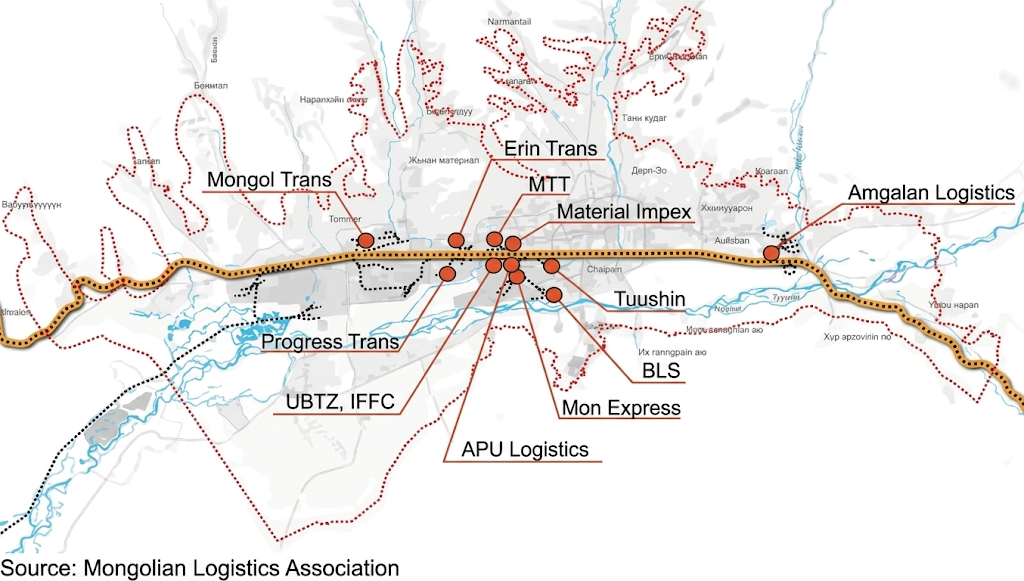
Зураг-1. Transport terminals in the center of Ulaanbaatar
The aim is to study and prove the solution of using the main line of the UBTZ, which divides Ulaanbaatar city into two parts, along with some branch roads, for public high-capacity transport.
“Ulaanbaatar City Development Corporation” JSC is implementing a project to establish an integrated freight logistics center for Ulaanbaatar city on an area of 130 hectares on the “Khushi Valley” railway line, 34 km from the city center, in the southeast of the capital.
The project is included in the general plan for the development of the capital until 2030, approved by Resolution No. 23 of the State Great Khural of Mongolia, and subsequently included in the “Vision-2050” General Plan for the Long-Term Development of Mongolia, and legalized by Resolution No. 52 of the State Great Khural of May 13, 2020.
THEORETICAL OVERVIEW RESEARCH
Traffic congestion refers to the process of slowing down traffic on the road network and creating long queues of vehicles as the number of vehicles increases. According to researchers, when the number of cars per 1,000 people exceeds 30, road capacity decreases and traffic problems begin to arise. However, when the indicator exceeds 130, it is believed that there is a need to impose certain restrictions on the use of motor vehicles, while when it reaches 200–250, it is believed that it is necessary to implement policies to support public transport and give them priority.
However, in the case of Ulaanbaatar, the number of cars per 1,000 people has reached 239, indicating that road traffic is at an excessively high level, indicating the urgent need to develop public transport and implement a demand-based transport policy.
Many major cities around the world have experienced significant reductions in road congestion by moving railway lines out of city centers, detouring them, or using them as high-capacity public transportation systems for passenger transportation. Researchers Vuchic (2007) and Rodrigue (2020) have found that rail-based public transportation is one of the most effective solutions for reducing road congestion, as it provides high-throughput and sustainable mobility. For example:
- In Seoul, South Korea, the Gyeongui Line was reorganized and a project was implemented between 2000 and 2010 to reduce freight traffic through the city center, move some parts underground, and use the remaining lines for passenger transportation. In this context, Seoul Development Institute (2012) and Kim & Lee (2014) concluded that road congestion was reduced by 30–50 percent through comprehensive planning of the urban railway environment, integrating public transportation and green spaces.
- The Chicago Region Environmental and Transportation Efficiency Program (CREATE) program, launched in 2003 in Chicago, USA, has been reducing congestion at railroad crossings and crossings by constructing bypasses, flyovers, and new routes. According to research by Cambridge Systematics (2015) and the Federal Railroad Administration (2018), the project has reduced peak-hour traffic congestion by 15–25 percent and vehicle delays at railroad crossings by up to 30 percent.
- In general, international studies have shown that the optimal organization of the railway network in coordination with urban planning is an important factor in reducing road traffic, increasing the use of public transport, and supporting sustainable urban development (Vuchic, 2007; Rodrigue, 2020).
In addition to the above experiences, there are many examples of other cities around the world reducing road congestion with rail-based transport solutions. Researchers Cervero (1998) and Newman & Kenworthy (2015) have found that railways and high-capacity public transport systems have a significant impact on reducing car dependence and improving the efficiency of urban mobility. For example:
- In Tokyo, Japan, the rail-based public transport network is the mainstay of urban mobility. Most passenger traffic in the city is carried by rail, and car use is relatively low. According to a study (Japan Transport Policy Study, 2016), a high-density rail network plays a key role in keeping traffic congestion at a sustainable low level.
- In London, UK, the Crossrail (now Elizabeth Line) project, which connects the city’s suburbs and the city center, has significantly increased public transport capacity. According to an assessment by Transport for London (2022), the project has significantly reduced road traffic in the central area and significantly reduced travel times.
- In Paris, France, the RER (Réseau Express Régional) suburban rail system has been developed to reduce car traffic into the city center. According to a report by the OECD (2019), the RER system carries millions of passengers per day and contributes significantly to reducing traffic congestion.
- In Berlin, Germany, the coordinated development of the S-Bahn and U-Bahn systems has increased public transport accessibility and reduced car use. According to BVG (Berlin Transport Authority, 2020), high public transport use is a key factor in maintaining the city’s congestion level.
Therefore, international experience shows that developing a rail-based public transport system and rationally organizing freight and passenger traffic is an effective and long-term sustainable solution to reducing road congestion (Cervero, 1998; Newman & Kenworthy, 2015).
The Mongolian Government’s Resolution No. 229 of December 25, 2024, declared 2025 as the “Year of Supporting the Development of the Capital City Infrastructure”. In this context, a total of 24 projects are planned to be implemented between 2025 and 2028 to reduce road congestion in Ulaanbaatar. The following projects and programs are included in the transport infrastructure sector. These include:
- Ulaanbaatar Metro
- Ulaanbaatar Tram
- Tuul Highway
- Detour
- Oude Temul Bridge
- Special Road Bus
- Tramway
- Light Rail Transit /LRT/
- Khushigiyin Valley Branch Railway.
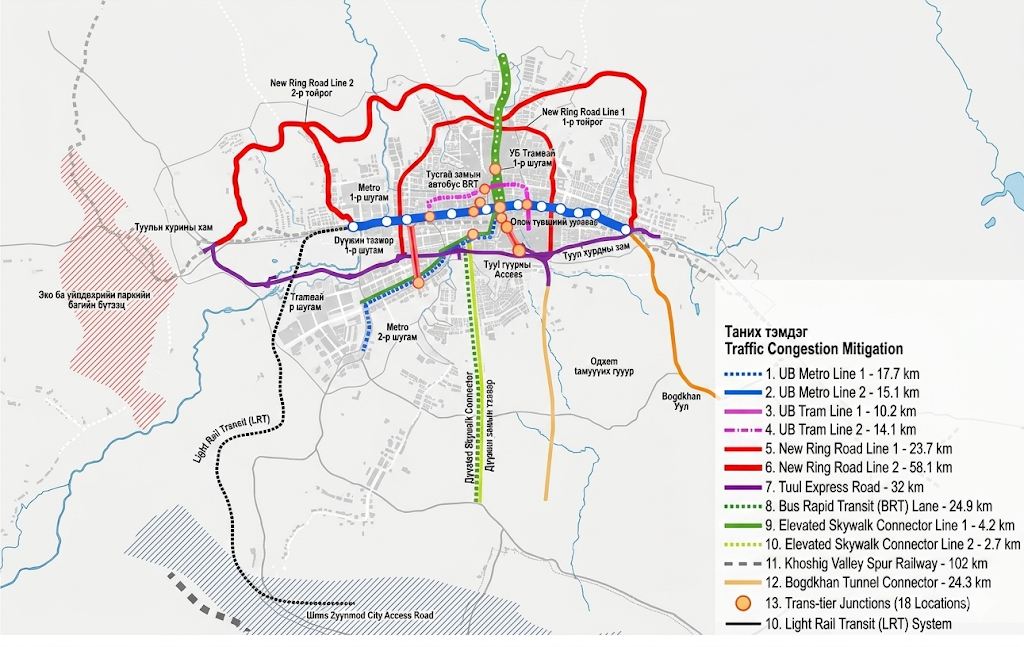
Figure-2. Projects to be implemented in the transport infrastructure sector
The following theoretical diagram illustrates how urban road congestion (VKT) is determined by the economic demand-cost equilibrium.
Road congestion is an equilibrium phenomenon characterized by the interaction of travel demand and congestion costs, in addition to the lack of road capacity. Therefore, the model also shows that increasing road capacity alone is not sufficient to reduce congestion in the long term, but that reducing network disruptions (especially rail-highway level crossings), increasing the competitiveness of public transport, and implementing demand management policies are more effective.
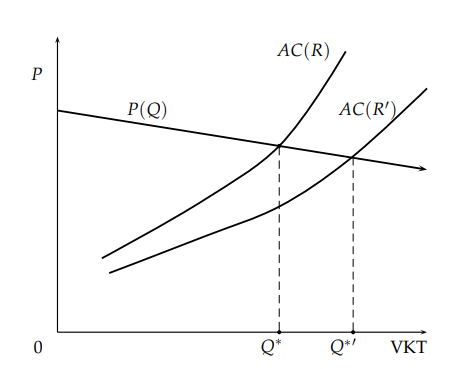
Figure-3. Road traffic demand and supply
Lesson: R – total length of road (lane-km)
Q – total number of trips (VKT)
P(Q) – “demand” for travel or people’s willingness to travel (inverse demand)
C(R, Q) – total cost
AC(R, Q) = C(R,Q) / Q – average cost (cost per kilometer of travel)
To explain the congestion in Ulaanbaatar, Q (travel) is too high, AC (congestion cost) is too high, and overall the system is in a “bad equilibrium”.
RESEARCH SECTION
In Ulaanbaatar, 54.1 percent of all registered vehicles are on the road, indicating a high concentration of traffic on the city’s roads. A survey conducted among the city’s citizens found that 85 percent of respondents considered traffic congestion to be a pressing issue that needed to be addressed urgently, clearly demonstrating the socio-economic importance of the issue (World Bank, 2020).
The current average speed of traffic on the city’s roads is 13 km/h, but during peak hours it drops to 8.9 km/h, indicating a significant deterioration in traffic efficiency. The study found that the road network has exceeded its capacity three times compared to 2010, indicating that the growth of vehicles has significantly outpaced the development of the city’s infrastructure (Asian Development Bank, 2021).
The socio-economic consequences of congestion are also high. For example, citizens spend an average of 2.5 hours per day, approximately 35 days per year, in traffic jams, with the resulting lost opportunity cost reaching 2.3 trillion tugriks (JICA, 2019). In addition, 78 percent of the capital’s road network is permanently congested, indicating a systemic problem. If current trends continue, studies warn that the average speed of vehicles is at risk of decreasing to 6 km/h by 2025 and 3 km/h by 2030. In addition, railway-highway level crossings are an important factor that increases traffic disruption. Studies show that passenger trains are blocked for an average of 2 minutes and freight trains for 4 minutes. Such intersections are located on four main roads in Ulaanbaatar, and these crossings are closed for train traffic for an average of 144 minutes per day. However, it is estimated that the Khushi Valley railway line could reduce this time by 41 minutes (Ministry of Road and Transport Development, 2022).
Therefore, Ulaanbaatar’s traffic congestion is not only caused by the increase in the number of cars, but also by the combined effects of many factors, including over-concentrated urban development, mobility based on private cars, weak competitiveness of public transport, and network disruptions caused by railway-highway intersections. This situation is consistent with the above conclusion, which is described by the World Bank (2020) as a “dysfunctional urban mobility system”.
The indicators mentioned in the study, such as “the road network has exceeded its capacity three times compared to 2010”, “citizens spend an average of 2.5 hours a day and 35 days a year in traffic jams”, and “78 percent of the capital’s road network is congested” are consistent with the effective content mentioned in previous domestic studies and media sources.
Table 1
Proportion of main causes of road congestion in Ulaanbaatar city
| № | Reasons | Comments | Impact percentage (%) |
| 1 | Excessive growth of automobiles | The number of cars has increased ~3–4 times since 2010 | 35–40% |
| 2 | Insufficient road network capacity | Urban planning is outdated, expansion is slow | 20–25% |
| 3 | Underdeveloped public transport | Bus speed and accessibility are low | 10–15% |
| 4 | Poor traffic management | Traffic lights and intersections are poorly regulated | 10–12% |
| 5 | Overlapping school and work hours | Congestion increases sharply during peak hours | 5–8% |
| 6 | Roadside obstacles (parking, road repairs, accidents) | Temporary obstacles, illegal parking | 5–7% |
| 7 | Urban concentration (center-oriented traffic) | Work and services are concentrated | 5–8% |
For example, a 2021 study found that Ulaanbaatar’s road traffic has tripled since 2010, with citizens spending an average of 35 days a year in traffic jams, and 78 percent of the road network congested. A 2021 survey also found that 85 percent of respondents felt that congestion needed to be addressed urgently, indicating that the problem is not just an engineering issue, but a complex one with high socio-economic costs.
Table 2
Actual traffic congestion figures in Ulaanbaatar
| № | Indicator | Figures | Source, explanation |
| 1 | Total number of vehicles | 720,000 (2023) | City’s car fleet has grown dramatically |
| 2 | Cars in traffic per day | 420,000–450,000 | Daily traffic |
| 3 | Cars added per year | 70,000–80,000 | Very high car growth |
| 4 | Population density | Over 1.6 million | High urban concentration |
| 5 | Road length | 1253 km | Limited infrastructure |
| 6 | Average speed during peak hours | 8.9–10.8 km/h | Very slow movement |
| 7 | Time spent in traffic jams per day | 2.5 hours/day | Impacts on quality of life |
| 8 | Speed reduction | 30–40 → 10 km/h | Decreased by 2–3 times in the last 20 years |
| 9 | Annual economic loss | 2.7 trillion ₮ (2020) | 8% of GDP |
| 10 | Fuel loss | $100 million/year | Excessive spending |
| 11 | Congestion per person per year | 35 days | Time loss |
| 12 | Daily traffic movements | 3 million trips/day | Load peaks |
| 13 | Traffic structure | 50% work, 25% school | Overlapping peak times |
These results clearly indicate that the only way to solve road congestion is to widen roads and build new roads. This is consistent with the “induced demand” theory of road congestion, which is based on the theory proposed by Gilles Duranton and Matthew Turner. According to this theory, when road capacity is increased, vehicle traffic increases, and in the medium term, congestion levels return to their previous levels (Duranton & Turner, 2011). Researchers such as Cervero (2003) and Hymel (2019) have also found that increasing road capacity increases vehicle traffic almost proportionally, and that improvements in speed are neutralized in the short term. Therefore, the “only widening roads are enough” approach is rejected and a combination of demand management and transport network congestion reduction policies is needed.
The issue of railway-highway level crossings was of particular interest to this study. At railway crossings located on four main roads in Ulaanbaatar, on average, passenger trains are blocked for 2 minutes and freight trains for 4 minutes, resulting in a total of 144 minutes of disruption per day. This creates a “bottleneck” in traffic flow and is a major cause of congestion throughout the network, especially during peak hours.
These results are consistent with international level crossing studies. For example, a study by Gregory Larue et al. found that improvements to active railway crossings in the city can reduce travel times for road users by 7–57 percent (Larue et al., 2015). Therefore, the 144-minute closures identified in the study are not just time delays, but also significant factors contributing to network-level congestion.
The conclusion that the commissioning of the Khushig Valley railway line can reduce the waiting time at the crossing by 41 minutes is theoretically and practically justified. In addition, it is believed that the bypass of the railway line in the middle of the city can redistribute freight traffic and remove about 316–1,800 large vehicles per day from the city road network. Therefore, the research hypothesis that “bypassing the railway freight traffic from the city center will reduce road congestion” can be confirmed.
Furthermore, by using the old railway line in the middle of the city only for passenger transport, it will be possible to develop new types of public transport (for example, trams). This will reduce the load on the hub stations such as Tolgoit, Ulaanbaatar-1, Ulaanbaatar-2, and Amgalan, and some parts of the current wide network can be redesigned for passenger transport. For example, using the current shunting and receiving tracks as the main routes of the double-track tram has the advantage of increasing service speed and throughput.
Thus, it is considered possible to develop a tram network in the following main directions based on the old railway line. These include:
- Central direction (Yarmag — Central Station area)
- Northern direction (Central Station — Tolgoit)
- Southern direction (Central Station — Amgalan)
- Amgalan internal connection
- Tuul honkhor direction
CONCLUSION
Reducing congestion at railway-highway level crossings is important for reducing traffic congestion in Ulaanbaatar, but it is not a sufficient condition to completely solve the problem. According to studies by the World Bank and Asian Development Bank, the main causes of congestion in Ulaanbaatar are structural factors such as urban overconcentration, work-to-home distance, poor quality and accessibility of public transport, and insufficient development of pedestrian and bicycle infrastructure.
Therefore, measures to reduce congestion at railway crossings are necessary but not sufficient. Their comprehensive implementation in conjunction with public transport reform, transport demand management policies, and rational land use planning will lead to higher results.
The novelty of this study is that it defines congestion in Ulaanbaatar not only as a problem of road capacity, but also as a problem of network bottlenecks where multiple transport networks intersect. The results of the study show that ensuring the continuity of traffic flow, especially reducing delays caused by railway-highway level intersections, is a realistic and profitable solution to reduce the high social and economic costs caused by congestion (an average of 2.5 hours per day, 35 days of loss per year, and an opportunity cost measured in trillions of kyats).
In the future, the following comprehensive measures should be implemented in stages within the framework of the policy to be implemented in Ulaanbaatar. These include:
(1) phase out freight rail traffic from the city center;
(2) implement level-separated solutions (crossings, bridges) at high-traffic railway crossings;
(3) improve the quality and accessibility of public transport and develop high-capacity transport modes;
(4) conduct a detailed study of the feasibility of introducing light rail and tram systems using the old railway lines in the city center, develop economic calculations and optimal route planning;
(5) implement policies to manage car use (limits, payment mechanisms, demand-based regulation).
This study proves that the implementation of a comprehensive policy that integrates the optimal organization of transport infrastructure, demand management, and public transport development is the most effective and sustainable solution to reducing traffic congestion in Ulaanbaatar.
References
1. Vuchic, V. R. (2007). Urban Transit Systems and Technology. Wiley.
2. Rodrigue, J. P. (2020). The Geography of Transport Systems. Routledge.
3. Seoul Development Institute. (2012). Urban Transport Improvement in Seoul.
4. Kim, H., & Lee, S. (2014). Urban rail redevelopment and traffic impact in Seoul.
5. Cambridge Systematics. (2015). CREATE Program Benefits Report.
6. Federal Railroad Administration. (2018). Chicago CREATE Program Evaluation.
7. Cervero, R. (1998). The Transit Metropolis. Island Press.
8. Newman, P., & Kenworthy, J. (2015). The End of Automobile Dependence. Island Press.
9. Japan Transport Policy Study. (2016). Urban Rail and Congestion in Tokyo.
10. Transport for London. (2022). Elizabeth Line Impact Study.
11. OECD. (2019). Urban Transport and Mobility Report.
12. BVG. (2020). Public Transport Usage in Berlin.World Bank. (2020). Ulaanbaatar Urban Transport Report.
13. Asian Development Bank. (2021). Mongolia Transport Sector Assessment.
14. JICA. (2019). Urban Transport Master Plan for Ulaanbaatar.
15. Ministry of Road and Transport Development. (2022). Railway Crossing Impact Study.
16. Duranton, G., & Turner, M. A. (2011). The Fundamental Law of Road Congestion. American Economic Review.
17. Cervero, R. (2003). Road Expansion, Urban Growth, and Induced Travel.
18. Hymel, K. (2019). If You Build It, They Will Drive It.
19. Larue, G. S., et al. (2015). Impact of Railway Level Crossings on Road Traffic Delay.
20. https://documents1.worldbank.org/curated/en/910671624759336006/pdf/Mongolia-Ulaanbaatar-Sustainable-Urban-Transport-Project.pdf?utm_source=chatgpt.com
21. https://mongolia.gov.mn/news/view/26055. Түгжрэлийг бууруулах богино хугацааны шийдэл танилцууллаа
22. Мэдээ 2021-08-30
23. https://www.ubpost.mn/a/12310 Traffic jam rises as new school year approaches
24. Socio-Economic study and financial analysis of the first ring road. Ulaanbaatar city 2025-07-25
25. Citizens' assessment of solutions to reduce highway congestion, Mongolian Marketing Consulting Group, 2025