
Resource-saving production of geopolymer composites based on high-tonnage industrial waste for use in road construction
As an energy-saving alternative to Portland cement, geopolymer composites are promising, which are characterized by low curing temperatures, low greenhouse carbon dioxide emissions, as well as a wide possibility of recycling multi-tonnage regional waste. The article is aimed at considering energy-saving technologies for the production of geopolymer composite materials, which are in demand in road transport construction. The most important initial components of a geopolymer composite are an aluminosilicate component (including many-tonnage ash waste, artificial slags, etc.) and an activating alkaline component. The physico-chemical mechanism of alkaline activation of technogenic waste for the production of geopolymer binders consists in the dissolution of aluminosilicate microparticles under the influence of concentrated alkalis (sodium, potassium) and subsequent stepwise polycondensation. It has been established that for the technological production of geopolymer composites with a strength of 27-52 MPa, the average size of microparticles of thermal power plant fly ash should be 18 microns, and the ratio of alkaline activator: ash is in the range of 0.47-0.72. Geopolymer composite materials based on industrial waste: slags and slurries can be effectively used for the installation of upper and lower layers of ground bases in highways of various transport and operational categories. By 2030 year, a systematic approach to the resource-saving disposal of large-tonnage industrial waste in Russia will make it possible to use up to 50% of technogenic raw materials in road construction.
resource protection, multi-tonnage waste, geopolymer, transport infrastructure, road engineering.
One of the technological challenges in the current geopolitical instability is the in-demand transition to resource-saving technologies for recycling many-tonnage industrial waste [1]. Geopolymer composites act as a promising energy-saving alternative to Portland cement and are characterized by low curing temperatures, low greenhouse gas emissions, as well as a wide possibility of recycling multi-tonnage regional waste. Innovative areas of frontier development of geopolymer multifunctional composite materials for road construction in the Russian Federation are relevant for the successful implementation of the national project «Infrastructure for life».
The purpose of this article is to consider energy-saving technological solutions for the production of geopolymer composite materials, which are in demand in regional road and transport building.
As part of the formation of an environmentally sustainable green road network, the expanded use of geopolymer composites, which are obtained as a result of a low-temperature reaction of alkaline activation of aluminosilicate man-made raw materials, is of particular interest. Portland cement clinker is traditionally fired at a temperature of 1450°C, and the technological process is extremely energy-intensive. The most important advantage of the frontier technology of geopolymer production in comparison with the multi-tonnage production of Portland cement binder is the absence of high-temperature heat treatment and a sharp decrease in greenhouse CO2 emissions. The cardinal solution to the problem of reducing the material consumption of the Russian road building industry and reducing damage to the surrounding regional ecosystem of Bashkortostan is facilitated by the partial or complete substitution of natural mineral raw materials in transport construction with geopolymer composites based on high-tonnage industrial waste [2, 3].
The main initial components of geopolymer composite concrete are an aluminosilicate component (including ash waste, technogenic slags, etc.) and an activating alkaline component. Overburden clays, ashes from thermal power plants, blast furnace slags, as well as other natural rock minerals and high-tonnage industrial waste can be technologically used as raw materials for composite geopolymers [4, 5].
In the physico-chemical process of technological manufacturing of a geopolymer composite by alkaline activation of technogenic ash and slag, the most important stages can be distinguished:
at the 1st stage, spontaneous dispersion of aluminosilicate slag particles occurs in an alkaline medium, which results in the breaking of covalent –Si–O–Si– and–Al–O–Al–chemical bonds; as a result, alkaline colloidal sols are formed;
At the 2nd stage, polycondensation cluster nanostructures are formed due to coagulation and gelation of aluminosilicate fragments.
The mechanism of alkaline activation of ash and slag waste for the production of geopolymer binders consists in the dissolution of aluminosilicate microparticles under the action of concentrated alkalis (sodium, potassium) and subsequent stepwise polycondensation [6]. Tetrahedral silicon-oxygen ([SiO4]4-) and aluminum-oxygen ([AlO4]5-) anions first form intermediates of fragmentary oligomers, –Al–O–Si–, which subsequently transform into an amorphous polymer gel of aluminosilicate hydrate macromolecules (Figure 1).
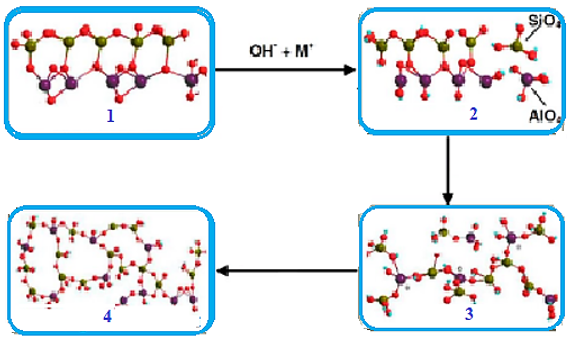
Figure 1. Physico-chemical mechanism of formation of macromolecules of aluminosilicate geopolymer gels (M+ – alkaline cations):
1 – aluminosilicate ash and slag; 2 – colloidal dispersion;
3 – oligomeric sol; 4 – macromolecular gel
Then on the granules of the primary solid phase at a curing temperature of 75-90°С fractal geopolymer macromolecules gradually crystallize. Currently, alumosilicate (nAl2O3∙mSiO2) initial precursors are considered as man-made raw materials for geopolymer binders: fly ash from coal combustion, metallurgical slags, bauxite sludge, waste from mining and processing of rocks, as well as building waste from the reconstruction demolition of transport buildings and constructions [7].
Promising technologies for the synthesis of binder compositions based on the use of high-tonnage waste and chemical by-products from industry include the production of geopolymer composites based on mechanically activated alumosilicate raw materials, whose polymerization hardening is activated by using concentrated alkali solutions. The activating alkaline solution was obtained from aqueous solutions of sodium hydroxide and silicate; percentage composition by weight: NaOH = 12%; Na2SiO3 = 30% and H2O = 58%. The developed geopolymer composite has a compressive strength of 58 MPa after heat treatment at a temperature of 90°C for six hours; significant water resistance (at least W10) and low water absorption.
Complementary factors of optimized polymerization of geopolymers: activators, feedstocks (multicomponent minerals nAl2O3∙mSiO2, blast furnace slag, etc.), reinforcing fibers and fillers affect the physical and mechanical characteristics of geopolymer composites. The scheme of high-tech formation of perspective geopolymer composites based on high-tonnage industrial waste is shown in Figure 2.
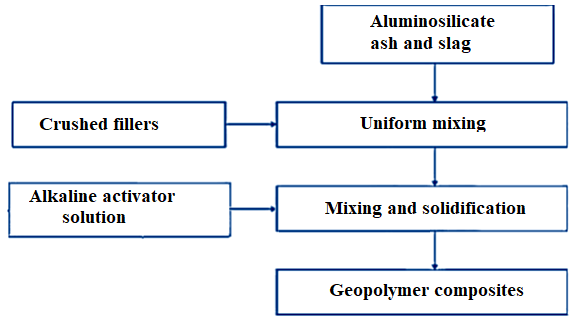
Figure 2. Scheme of formation of demanded geopolymer composites
For optimal use of geopolymer composites based on many-tonnage waste, it is necessary to compare technical and economic parameters: the cost and maintenance-free time of operation of highways in order to technologically objectively weigh the energy-saving advantages and disadvantages. For example, in the traditional production of 1 ton of Portland cement clinker, 0.55 tons of carbon dioxide (CO2) are released; in addition, about 0.4 tons of CO2 are generated by the combustion of hydrocarbon fuels; as a result, the production of 1 ton of Portland cement building purposes causes emissions of 0.95 tons of CO2 into the atmosphere, which leads to a significant increase in the carbon footprint. Resource-saving high-tech waste disposal methods during the production of geopolymers, which maximize the involvement of many-tonnage waste in recycling, must comply with the fundamental principles of sustainable development of human civilization (Figure 3).
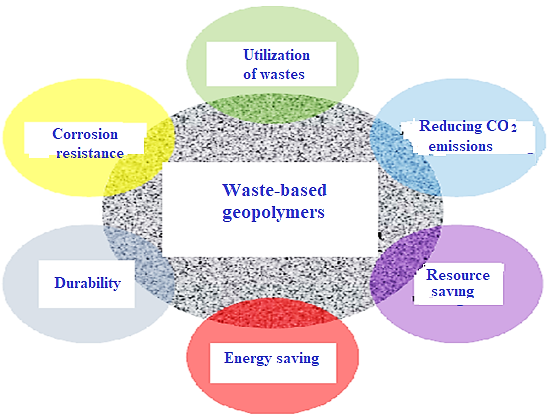
Figure 3. High-tech advantages of resource-saving use of geopolymer composites
Unlike the technology of obtaining Portland cement, the production of geopolymer composite binders does not have the most energy–intensive stage – high-temperature firing, which is the main advantage. Geopolymer composites based on the aluminosilicate precursor: fly ash are optimally suited for the structural construction of road transport constructions, providing durability and resistance to adverse conditions as an environmentally friendly alternative to Portland cement. Based on geopolymer complex concrete, a composition has been established for the innovative technology of additive construction printing using 3D printers [8].
Compared to slag-alkali binders in geopolymer composite concretes, alkali metal cations are totally chemically cemented, that is, they are enclosed in a supramolecular nanostructure and cannot migrate to the surface and enter into physico-chemical destructive reactions. Consequently, a stable, long-lasting microstructure of the heat-resistant building material is ensured, which is resistant to corrosion and other aggressive external influences. Due to this characteristic, geopolymer concrete can be reliably used to encapsulate radioactive waste.
Concentrated alkali solutions (NaOH and KOH); sodium, potassium (or mixed) liquid glass are used as the alkaline activator of the optimized geopolymerization process. The kinetic rate of geopolymer reactions is higher if the alkaline activator is a complementary solution of sodium hydroxide, sodium silicate (or potassium silicate). Mechanical crushing (mechanical activation) of fly ash leads not only to a decrease in particle size and an increase in specific surface area, but also to an increase in reactivity. At the molar ratio oxides of silicon (SiO2): aluminum (Al2O3) = 1.77 and 2.20 an amorphous glassy microstructure was found in the geopolymer, and the physico-mechanical strength increased 20-fold, which is explained by the formation of a supramolecular aluminosilicate crosslinked three-dimensional nanostructure [9].
It is established that for technological production of geopolymer composites with a strength of 27-52 MPa, the average size of fly ash microparticles should be about 18 microns, and the ratio of alkaline activator: ash is in the range of 0.48-0.72; the optimal ratio of sodium silicate and sodium hydroxide is 0.8–1.5; the molar concentration of NaOH is from 7.8 to 11.5 mol/liter. The resulting composites are suitable for the manufacture of road surfaces, while carbon dioxide CO2 emissions are reduced and multi-tonnage waste from thermal power plant waste is efficiently disposed.
The technological characteristics of geopolymers (physical, mechanical and operational) are functionally related to the chemical and mineralogical composition and dispersion of the mineral component, the nature and concentration of the alkaline component, as well as the presence of additives, structural features and other factors. Sufficiently high physical and mechanical characteristics of the geopolymer composite: compressive strength of 65-70 MPa are achieved when the initial raw material composition contains 25% blast furnace slag, 8-10% sodium silicate, 2.5% sodium hydroxide. For geopolymer compositions containing sodium silicate and cured at 80°C, KOH is a more effective alkaline activator than sodium hydroxide. An increase in the dispersion of the aluminosilicate component 1.5 times leads to an increase in strength from 55 to 74 MPa; ash and slag additives, which are introduced into the composition of aluminosilicate kaolin, can reduce the heat treatment time from 5-7 hours to several minutes [10, 11].
Digital technologies of optical and robotic sorting of streams of various waste products make it possible to more selectively extract raw aluminosilicates for subsequent use in the production of geopolymers. Despite the significant advantages of geopolymer composites, they are currently underused as binders in the construction of road transport structures. The main reasons that hinder the technological use of geopolymer binders in the energy-saving transport building industry are: the inconstancy of the chemical and mineralogical composition of alumosilicate artificial raw materials; poor development of regulatory documents, etc.
The physical and mechanical characteristics of geopolymer composites and the areas of their technological use in the road construction of transport buildings depend on the molar ratio of silicon and aluminum components (Si/Al oxides)
■ Si/Al = 1 — energy–saving building materials for the manufacture of ceramic road transport constructions;
■ Si/Al = 2 – building materials for the production of geopolymer concrete with low carbon dioxide emissions during production;
■ Si/Al ≤ 3 are highly efficient materials for additive 3D printing technologies made of geopolymer composites, which are increasingly being used in transport building, including strengthening highway roadways [12-14].
Geopolymer composite binders based on industrial waste: slags and slimes can be effectively used for the installation of upper and lower layers of soil foundations in highways of various transport and operational categories. Assessment of the possibility of high–tech use of secondary multi–tonnage resources – industrial waste – in innovative technologies for strengthening dispersed grounds allows not only to reduce the cost of road building, but at the same time contributes to the effective solution of acute geoecological problems of Bashkortostan [15].
High-quality regulatory building and ensuring long-term operation of trunk and regional highways in low-lying areas where clay and loamy grounds predominate, a distinctive feature of which is a sharp decrease in their physical and mechanical characteristics during waterlogging, is possible only when strengthening the foundations of the roadway with various composite binders. Since large volumes of gravel, crushed stone, etc. are required during the building of the M-12 tall-speed highway, reconstruction of federal highways and infrastructural transport facilities M-5 and M-7 [16], therefore road building will soon be a significant consumer of large-scale technogenic waste.
For example, geopolymer composites based on multi-tonnage industrial waste are used in road construction in the construction of reinforced bases of highways [17]. A technology for using geopolymers to stabilize swelling clay dispersed soils has been developed to improve the physical and mechanical characteristics of the roadway foundations (Figure 4).
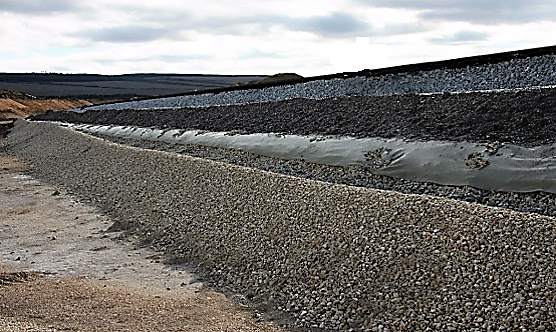
Figure 4. Resource-saving use of geopolymer composites in the construction of reinforced bases of the M-12 highway section
Multi-tonnage waste from regional industrial production: sludge, ash and slag waste, metallurgical slags, etc. are similar in chemical composition to natural raw materials, which determines the prospects of using them instead of natural stone materials in the innovative production of building materials for road use. For example, the chemical and mineralogical composition of fly ash includes: silicon oxide (more than 50%), aluminum oxide (20-25%), ferric oxide (5-9%), calcium oxide (2-5%); variations in the content of oxides are related to the source of the deposit of burnt coal, incineration technology, etc. The rather low hydraulic activity of fly ash is enhanced by the addition of lime [18], which, along with a high specific surface area, is the reason for the appearance of astringent properties.
However, currently, manufacturers of highway building materials are not sufficiently using the secondary resource potential of multi-tonnage industrial waste in manufacturing technologies for geopolymer composites for road use. Therefore, due to a number of economic, technological and other reasons, non-recyclable waste has been placed in storage dumps for decades. An innovative trend is a systematic approach to recycling Russia’s secondary waste by increasing resource–saving recycling, which will allow using up to 50% of industrial raw materials in road construction by 2030. The reuse of local industrial waste resources reduces the cost of producing road building materials for high-speed federal highways by 15-35%.
Geopolymer composite materials are not inferior in physical and mechanical characteristics to Portland cement concretes due to the formation of strong branched macro chains -O–Si–O–Al–O–; are not susceptible to oxidation, are nonflammable, and have high thermal and radiation resistance. By varying the ratios of raw materials and adjusting the synthesis conditions of geopolymer binders, the production of composite materials based on aluminosilicate lime-slag binders has been advanced, which are in demand in the construction of transport infrastructure facilities with a variety of necessary characteristics: low shrinkage deformations, the ability to adjust the hardening of coatings, etc. A number of infrastructure projects for the introduction of artificial intelligence [19] have implemented the use of geopolymer composites in the building of road transport facilities.
The demand use of unmanned intelligent vehicles [20, 21] can significantly transform the methodology of designing and implementing the construction of road infrastructure facilities using waste-based geopolymers, especially in natural and climatic zones with difficult engineering and geological conditions. To create and sustainably develop the geopolymer building materials industry, it is necessary to accumulate and systematically analyze data on the impact of various factors on technological characteristics. Multicriteria optimization of big data on the parameters of labor costs and resources of geopolymer composites becomes the initial array for algorithms of neural network methods.
The successful implementation of the transport strategy of Russia and the federal network of high-speed highways M-5, M-7 and M-12 in Bashkortostan is associated with comprehensive planning for the development of the economic and logistics infrastructure of the republics and regions between the Volga and the Urals. Transport accessibility allows organizing various types of medical and recreational tourism in the tourist and recreational complexes of Bashkortostan. Russian regions have significant tourist and recreational potential, including landscape natural resources and objects of world and national cultural and historical heritage.
Thus, in conclusion, it can be deduced that the further expansion of the frontier technology of using geopolymer composites makes it possible to progress demanded road building materials with more enhanced physical and mechanical characteristics, and the disposal of multi-tonnage technogenic waste solves topical environmental problems and reduces the carbon footprint.
References
1. Eroshkina N.A., Sadenko S.M. Technology and properties of geopolymer materials for construction purposes. Penza: PGUAS, 2019. 188 p. ISBN 978-5-9282-1647-4. EDN WVYGNN.
2. Alikina Yu.A., Alekseev A.A., Golubeva O.Y. Geopolymer materials: problems, achievements and prospects. Journal of Applied Chemistry. 2024. V.97. No.2. Р.114-131. https://doi.org/10.31857/S0044461824020026 EDN DVMEGO.
3. Ivanova O.V., Glazachev A.O., Pavlov S.Yu. et al.. The demand energy-saving use of geopolymer materials. Modern prospects for the development of the industry builds.: Collection of the 3rd All–Russian Conference. Kursk: Publ. "University book", 2025. Р.181-184.EDN VLWANX.
4. Cong P. Cheng Ya. Advances in geopolymer materials // Journal of Traffic and Transportation Engineering. 2021. V.8, No.3. P.283-314. https://doi.org/10.1016/j.jtte.2021.03.004 EDN IULPZG.
5. Ivanova O.V., Khalikov R.M., Latypova Z.B. Energy-saving use of geopolymer composites in building materials science. Problems of development of modern society: Collection of the 10th All-Russian Conference. Kursk: Publ. "University Book", 2025. Р.144-147.EDN OYKNXK
6. Delitsyn L.M., Kulumbegov R.V., Popel O.S. et al. Processing of ash and slag waste from coal-fired thermal power plants and extraction of commercial products from the waste. Thermal Engineering. 2025. V.72, No.3. P.203-220. https://doi.org/10.1134/S0040601524700836. EDN BIGRZQ.
7. Kholyanova M.D., Rossokhina A.N. Problems of the introduction of geopolymer binders and materials based on them in construction. Modern technologies in construction. Theory and practice. 2023. V.2. Р.239-244. EDN VZOADK.
8. Ivanova O.V., Khalikov R.M., Salov A.S. et al. Technological equipment management for 3D additive printing of building nanocomposites. Nanotechnologies in Construction. 2021; 13(2): 117–123. https://doi.org/10.15828/2075-8545-2021-13-2-117-123. EDN PDLKKY.
9. Nedoseko A.I., Khalikov R.M., Pavlov S.Yu. et al. Supramolecular improvement of the performance characteristics of asphalt-concrete road coverings by structuring additives of functional polymers. Smart composites in construction. 2025. V.6, No.4. Р.43-54.https://doi.org/10.52957/2782-1919-2025-6-4-43-54. EDN BGNCBM.
10. Wang H., Zheng Yu., Yu Zh. Influence of ambient relative humidity on the shrinkage strain of engineered geopolymer composites. Materials. 2024. V.17, No.17. P.4321. EDN GGEBXG.
11. Khalikov R.M., Ivanova O.V., Pavlov S.Yu. et al. Energy-saving technologies for the use of geopolymer composites in the construction of transport facilities. Actual problems of science and education: Collection XXXVII Internation. Conf. Moscow: Publ. "Znanie-M", 2025. Р.525-530. EDN BDOJEN.
12. Bulanov P.E., Vdovin E.A., Stroganov V.F., et al. Strength characteristics of stabilized soils with geopolymer binders for road construction. Izvestiya KGASU. 2025. No.2(72). Р.258-267. EDN ORUYKA.
13. Ricciotti L., Frettoloso C., Franchino R. et al. Geopolymer materials: cutting-edge solutions for sustainable design building. Sustainability. 2025. No.17. Р.7483. https://doi.org/10.3390/su17167483
14. Bakunov V.S., Khalikov R.M., Shayakhmetov A.U. et al. Hardening of an alumophosphate composition under heating. Refractories and technical ceramics. 2016. No.3. Р.24-27. EDN YKWRCT.
15. Latypova Z.B., Khalikov R.M., Glazachev A.O. et al. Geoecological aspects of the use of lime-containing large-tonnage soda production waste in Bashkortostan. Problems of regional ecology. 2023; 4:68-72. https://doi.org/10.24412/1728-323X-2023-4-68-72. EDN ZFOTOL.
16. Bogushevich S.A., Samuilov V.M., Nevolin D.G. et al. High-speed highway M-12 Moscow – Tyumen: prospects and stages of construction. Innovative transport. 2022; 1(43):3-7. https://doi.org/10.20291/2311-164X-2022-1-3-7. EDN CQPVXF.
17. Khalikov R.M., Ivanova O.V., Pavlov S.Yu. et al. Innovative technologies in the construction of the Dyurtyuli-Achit section of the M-12 federal highway. Trends in the development of science and education. 2024; 108-13:62-65. https://doi.org/10.18411/trnio-04-2024-711. EDN SKRIKH.
18. Suleymanova L.A., Ryabchevsky I.S., Chesnokov I.A. Investigation of factors influencing the physico-mechanical characteristics of geopolymer concrete University Science. 2021. No.2(12). Р.68-70. EDN PITZIY.
19. Aristova D.A., Makeeva E.Z., Fedorova O.V. The effects of the introduction of intelligent transport systems. The transport business of Russia. 2022; 1:114-115. EDN FTTQWY.
20. Lipatov M.S., Maksimov Ya.V. Application of new technologies on the example of unmanned vehicles using artificial intelligence. International Journal of Professional Science. 2024. No.3-2. P.6-12. EDN WXBFLT.
21. Ivanova O.V., Pavlov S.Yu., Glazachev A.O. et al. Innovative unmanned vehicle operation technologies in high-speed federal highways. Modern innovations in engineering and technology: Collection of the International Conference. Kursk: Publ. "Univer. book", 2025; Р.139-142. EDN XOADRL.