
Electromagnetic pollution of the environment
Electromagnetic pollution is the result of the development of human civilization, which harms the environment. This type of pollution began to occur after Nikola Tesla invented devices that operate on alternating current. As a result, electronic devices, television lines, radio stations, power lines, technological equipment, X-ray and laser installations, and other sources of pollution have a negative impact on the environment.
Humans cannot see or feel electromagnetic fields, which is why they are not always aware of the dangerous effects of these fields. My work confirms the existence of their negative impact on living organisms.
electromagnetic pollution, electromagnetic fields, electromagnetic smog, electromagnetic ecology, membrane, bioindication.
Substance and field are two forms of existence of matter. And if a person encounters a substance every moment and feels it, then the field is not perceived by the human senses. Electromagnetic fields are invisible, inaudible, tasteless and not perceived by the sense of touch. They spread with a huge speed. This is the insidiousness of electromagnetic fields and their environmental danger – they are not perceived by the senses, but they can cause irreparable harm to living organisms.
From a scientific point of view, the relevance of this work lies in the fact that studying the effects of electromagnetic pollution caused by electromagnetic radiation will allow us to develop effective methods for protecting the environment and all living organisms from this danger.
The electromagnetic background has always been present on the planet. It contributes to the development of life, but its natural influence does not harm the environment. However, as electrical devices and appliances began to be used in industrial and domestic settings, the intensity of radiation increased. This led to the emergence of wavelengths that were previously non-existent in nature.
With the emergence of anthropogenic pollution sources, electromagnetic fields began to have a negative impact on both human health and the environment. This led to the phenomenon of electromagnetic smog, which can occur both outdoors and indoors.
Electromagnetic smog is the superposition of electromagnetic fields in the human environment caused by electromagnetic radiation of all kinds (Figure 1).
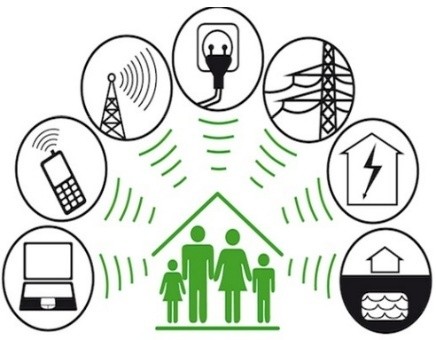
Figure 1.
Various household appliances can serve as sources of electromagnetic «pollution» in homes and apartments, such as refrigerators, irons, electric stoves, televisions, computers, vacuum cleaners, hair dryers, electric kettles, and others.
Measures to protect against the effects of electromagnetic smog:
- Time protection — reducing the time spent near working electrical appliances, near high-voltage lines, and so on.
- Distance protection — moving away from working appliances.
- Do not concentrate several devices in one place, overlapping electromagnetic fields are much more dangerous.
Electromagnetic pollution is dangerous for the environment, as it has a negative impact on the environment. The exact mechanism of this type of radiation on a living organism is unknown.
At the cellular level, the membrane is the most sensitive to various physical and chemical stimuli and effects. Even minor electromagnetic radiation can cause morphological and functional disturbances in the membrane. As a result, the cell’s field energy is converted into other forms, and the cell may increase in size (Figure 2).
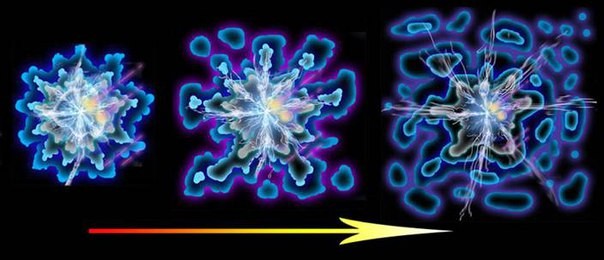
Figure 2
Bioindication of electromagnetic fields is a comprehensive assessment of the impact of EMFs on the environment using living organisms as bioindicators.
Bioindicators are living organisms that have a pronounced reaction to external influences. They include various species of plants, fungi, algae, and animals. Bioindication is an integral part of biological monitoring, a system of observation and control over the state of the environment in a specific area, aimed at the rational use of natural resources and the protection of nature.
Studying the consequences of anthropogenic impact on the environment is impossible without using biological indicators, which provide direct information about the organisms’ response to stress factors.
The main objective of bioindication is to develop methods and criteria that can adequately reflect the level of anthropogenic impact, taking into account the complex nature of pollution.
As an example of bioindication, I grew single-celled organisms called ciliates (Figure 3).
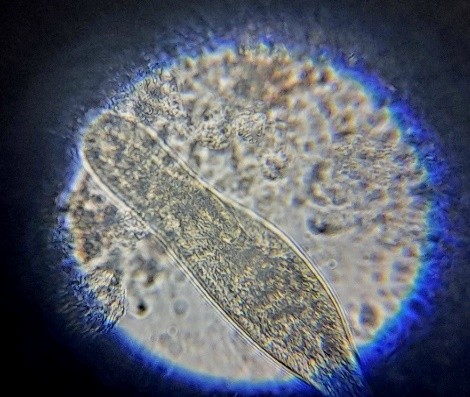
Figure 3
The movement of the infusoria — slipper is carried out with the help of cilia. They cover the entire body of a unicellular and there are a very large number of them. All cilia are arranged in regular longitudinal rows, making them undulate. The velocity of the ciliate is 2-2.5 mm per second, which is a very high speed. The sizes of different types of shoes range from 0.1 to 0.5 millimeters.
In today’s society, the emergence of new types of vehicles, such as electric cars, has increased the level of electromagnetic pollution. Since electric cars are not widely available, I have chosen to focus on another type of electric vehicle: the trolleybus.
To determine the intensity of electromagnetic fields in the trolleybus cabin that affect people, measurements were taken at a height of 1 meter above the floor. All areas of the trolleybus cabin were examined.
The maximum value of the electric radiation is 90 V/m – this is the driver’s cabin (Figure 4). With an increase in the distance, there is a decrease in the electric radiation. This value does not exceed the maximum permissible levels of electromagnetic fields. The electric component of the trolleybus’s electromagnetic field does not exceed 500 V/m in all controlled areas.

Figure 4
We conclude that the object under study can be considered relatively safe at any point in the cabin, meaning that it is safe for both passengers and staff. The largest fluctuations in the magnetic field occur in the subway.
What should a person do, how should he behave, how should he protect the environment in the face of an increasing number of technical devices that emit electromagnetic energy? (Figure 5).
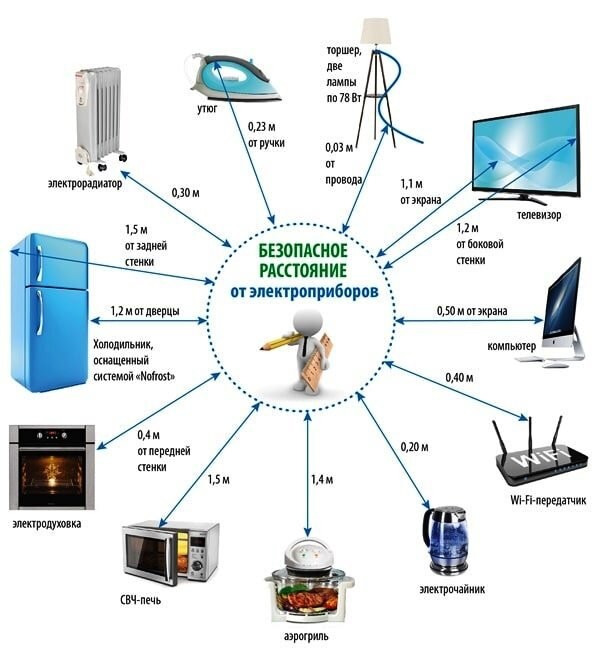
Figure 5
Place the equipment in the house correctly.
When you have finished working with household appliances, immediately disconnect them from the electrical outlet.
Do not place a TV, computer, or other appliances in the bedroom, as it is the most radiation-protected area in the apartment. The nightlight outlet should be at least one meter away from the bed.
Do not turn on multiple sources of electromagnetic field at the same time. Use household appliances separately whenever possible.
Do not leave your computer or monitor on for long periods of time. If you are not using your computer, turn it off.
When waiting for a mobile phone connection, do not hold the phone close to your ear and monitor the signals on the display. Keep your cell phone conversations as short as possible.
Electromagnetic pollution of the environment is one of the most pressing problems for humanity. Every day, we turn on our microwave ovens, talk on our mobile phones, drive in our cars, and work on our computers, without realizing that each of these technological inventions has its own negative effects on us. A powerful source of harmful radiation is the computer, which many people spend most of their day in front of. In this case, both the processor and the monitor are sources of radiation. Another major contributor is the mobile phone. When exposed to this device, it is customary to distinguish two effects: thermal and non-thermal. Of course, it is not worth giving up on inventions that make life easier. However, in order to prevent technological progress from becoming an enemy instead of a helper, it is important to follow certain rules and use technological innovations wisely.
Anyone can contribute to saving the planet, as long as they start.
References
1. Buzov A.L. Electromagnetic ecology. Basic concepts and regulatory framework: textbook/A.L. Buzov, Yu.M. Spodobaev, L.S. Kazansky, V.A. Romanov. – M.: Radio and communication, 2024.-100p.
2. Emelin V. A. Electromagnetic field/ V. A. Emelin. – Moscow: Canon+ : Rehabilitation, 2017. – 355 p.
3. Ilyin, Yu. A. On measures to improve the environmental situation in Russia/ Yu.A. Ilyin // Ecology of Russia. - 2019. - No. 1.- pp. 3-8.
4. Krasnogorskaya N.V. Electromagnetic fields in the biosphere (in 2 volumes), M., Nauka, 2004
5. Presman A.S. Electromagnetic fields and wildlife/ A.S. Presman. - M.: Nauka, 2018. - 287c
6. Rusin S. N. Conceptual problems of environmental safety and state environmental policy / S. N. Rusin// Environmental Law. - 2024. - No. 5. - Pp. 12-18.
7. Yazhlev I. K. Ecological Restoration/ I. K. Yazhlev // Ecology of Russia. - 2021. - No. 3.- Pp. 48-51.